Problem J5: Harvest Waterloo
2024 · J5 · Original problem · DMOJProblem Description
There is a wildly popular new harvest simulation game called Harvest Waterloo. The game is played on a rectangular pumpkin patch which contains bales of hay and pumpkins of different sizes. To begin the game, a farmer is placed at the location of a pumpkin.
The farmer harvests all pumpkins they can reach by moving left, right, up, and down throughout the patch. The farmer cannot move diagonally. The farmer can also not move through a bale of hay nor move outside of the patch.
Your job is to determine the total value of all the pumpkins harvested by the farmer. A small pumpkin is worth , a medium pumpkin is worth , and a large pumpkin is worth dollars.
Input Specification
The first line of input is an integer which is the number of rows within the patch.
The second line of input is an integer which is the number of columns within the patch.
The next lines describe the patch. Each line will contain characters and each character will either represent a pumpkin size or a bale of hay: S for a small pumpkin, M for a medium pumpkin, L for a large pumpkin, or * for a bale of hay.
The next line of input is an integer where , and the last line of input is an integer where . Row and column is the starting location of the farmer and the top-left corner of the patch is row and column .
The following table shows how the available marks are distributed:
| Marks | Description | Bound |
|---|---|---|
| The patch is small and there are no bales of hay. | ||
| The patch is small and the bales of hay divide the entire patch into rectangular areas. | ||
| The patch is small and the bales of hay can be anywhere. | ||
| The patch is large and the bales of hay can be anywhere. |
Output Specification
Output the integer, , which is the total value in dollars of all the pumpkins harvested by the farmer.
Sample Input 1
6
6
**LMLS
S*LMMS
S*SMSM
******
LLM*MS
SSL*SS
5
1
Output for Sample Input 1
37
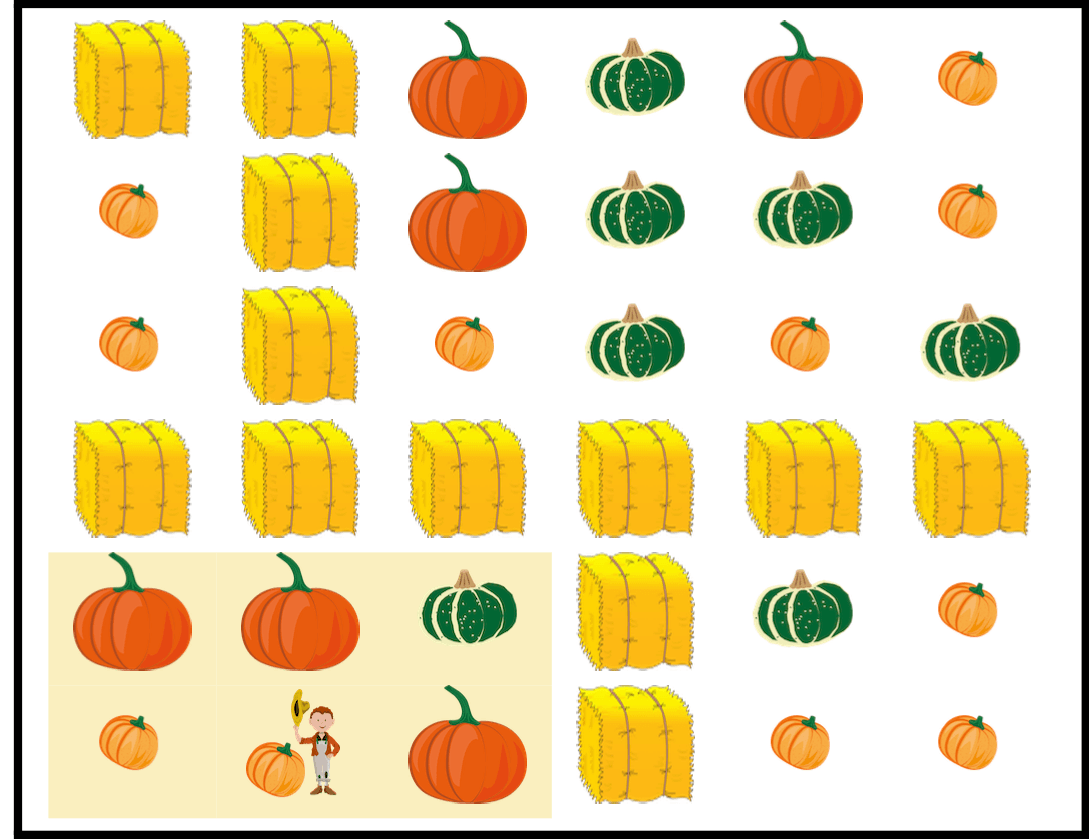
Explanation of Output for Sample Input 1
Starting at row 5 and column 1, the farmer can reach the 6 pumpkins in the highlighted area. They harvest 2 small pumpkins, 1 medium pumpkin, and 3 large pumpkins. The total value in dollars of this harvest is .
Sample Input 2
6
6
**LMLS
S*LMMS
S*SMSM
***SLL
LLM*MS
SSL*SS
2
4
Output for Sample Input 2
88
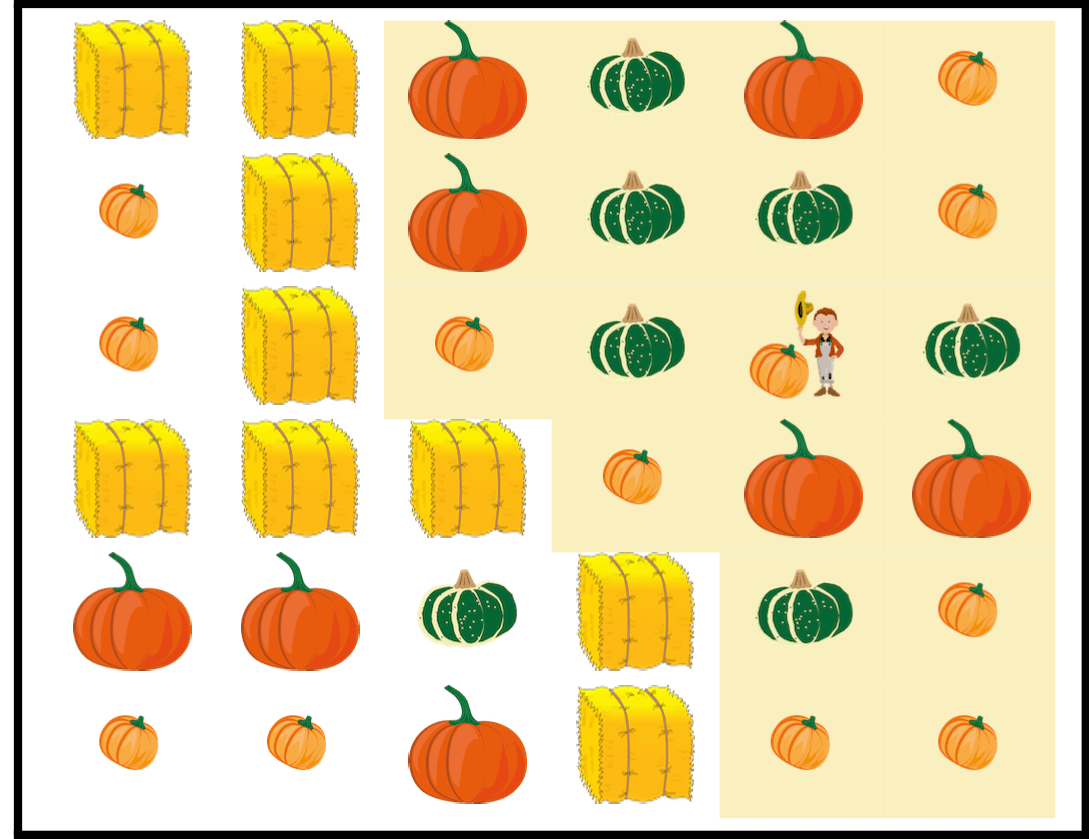
Explanation of Output for Sample Input 2
Starting at row and column , the farmer can reach the pumpkins in the highlighted area. They harvest small pumpkins, medium pumpkin, and large pumpkins. The total value in dollars of this harvest is .