Problem S5: RMT
2017 · S5 · Original problem · DMOJTime limit: 5 seconds
Problem Description
The Rail Metro Transit (RMT) operates a very unusual subway system. There are subway stations numbered from 1 to . There are subway lines numbered from 1 to , with each station belonging to exactly one line and at least one station per line. The subway lines are circular. That is, if a station is numbered , the next station after is the station on the same line with the next largest number, unless is the greatest number of a station in the line, in which case the next station after is the station on the same line with the least number.
RMT is conducting a load test of their system using volunteer passengers to ride the subway trains. The test begins with one subway train in each station and for every , there are passengers in the train at station . The volunteers do not leave their assigned trains throughout the entire duration of the load test.
Throughout the test, RMT will perform actions. Each of the actions is one of two types: either they will survey the total number of passengers in the trains at the stations numbered from to ; or they will operate all the trains on some line . When a train on line is operated, it goes to the next station in that line.
You are RMT’s biggest fan, so you have generously volunteered to keep track of RMT’s actions and report the answers to their surveys.
Input Specification
The first line will contain three space-separated integers , , and . The second line will contain the subway line numbers that each station from to belongs to: . The third line will contain integers representing the initial number of passengers at each station from to .
The next lines will each have one of the following forms:
-
1r, which represents a survey (). -
2, which represents RMT operating line ().
For 2 of the 15 available marks, and . For an additional 2 of the 15 available marks, . For an additional 3 of the 15 available marks, . For an additional 3 of the 15 available marks, there will be no more than trains on any single line.
Output Specification
For every survey, output the answer to the survey on a separate line.
Sample Input 1
5 2 5
1 2 1 2 2
1 2 3 4 5
1 1 5
2 1
1 3 5
2 2
1 1 3
Output for Sample Input 1
15
10
9
Explanation for Output for Sample Input 1
The subway system is illustrated below, with the stations numbered from 1 to 5 and the lines connecting stations marked as either being line 1 or line 2:
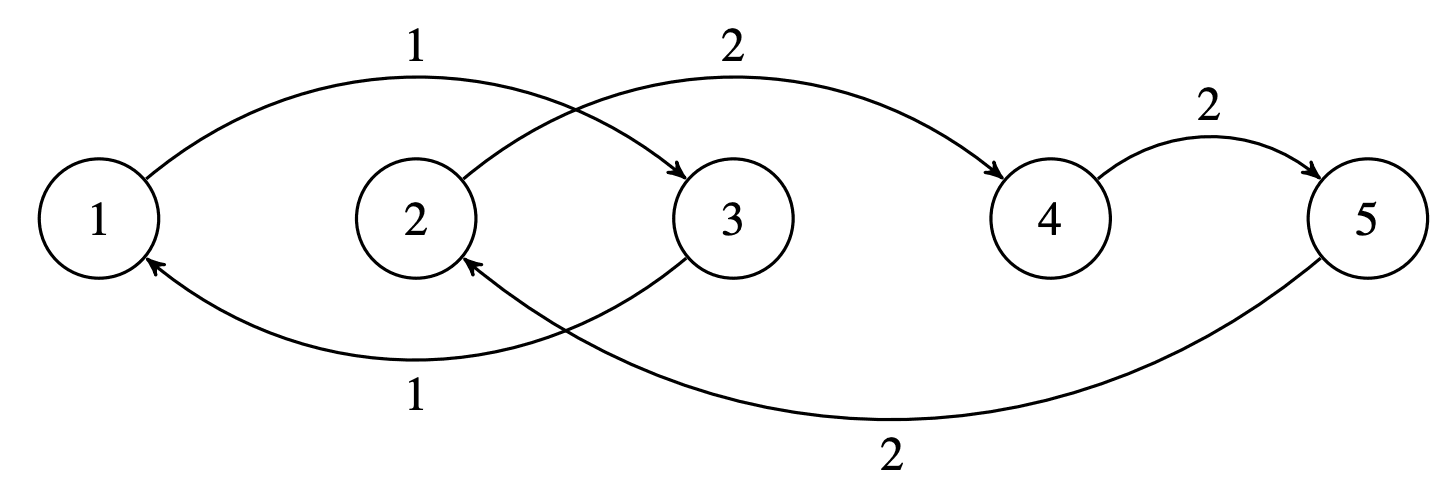
Initially, the number of passengers at each station is . The answer to the first survey is . After line is operated, the number of passengers at each station is . The answer to the second survey is . After line is operated, the number of passengers at each station is . The answer to the third survey is .
Sample Input 2
3 1 7
1 1 1
114 101 109
1 1 1
2 1
1 1 1
2 1
1 1 1
2 1
1 1 1
Output for Sample Input 2
114
109
101
114
Explanation for Output for Sample Input 2
The subway system is illustrated below, with the stations numbered from 1 to 3 and the lines connecting stations marked as all being line 1:
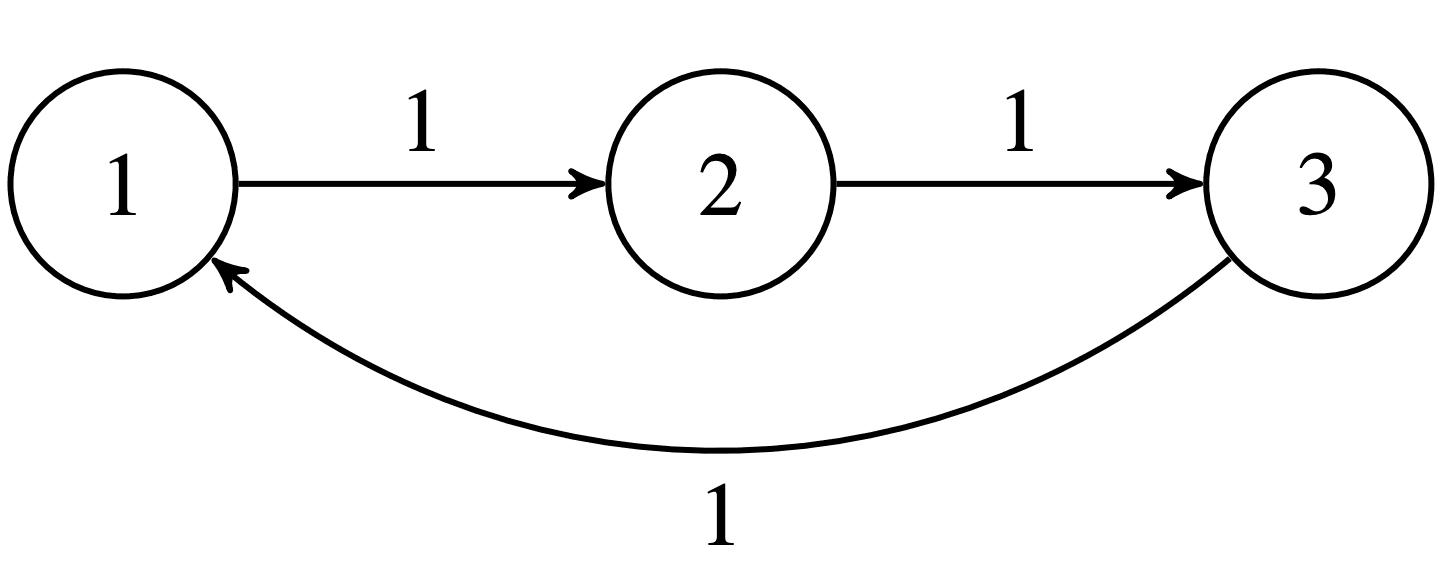
Just before the first survey, the number of passengers at each station is . Just before the second survey, the number of passengers at each station is . Just before the third survey, the number of passengers at each station is . Just before the fourth survey, the number of passengers at each station is .